

Description
World’s Simplest Productivity System Review
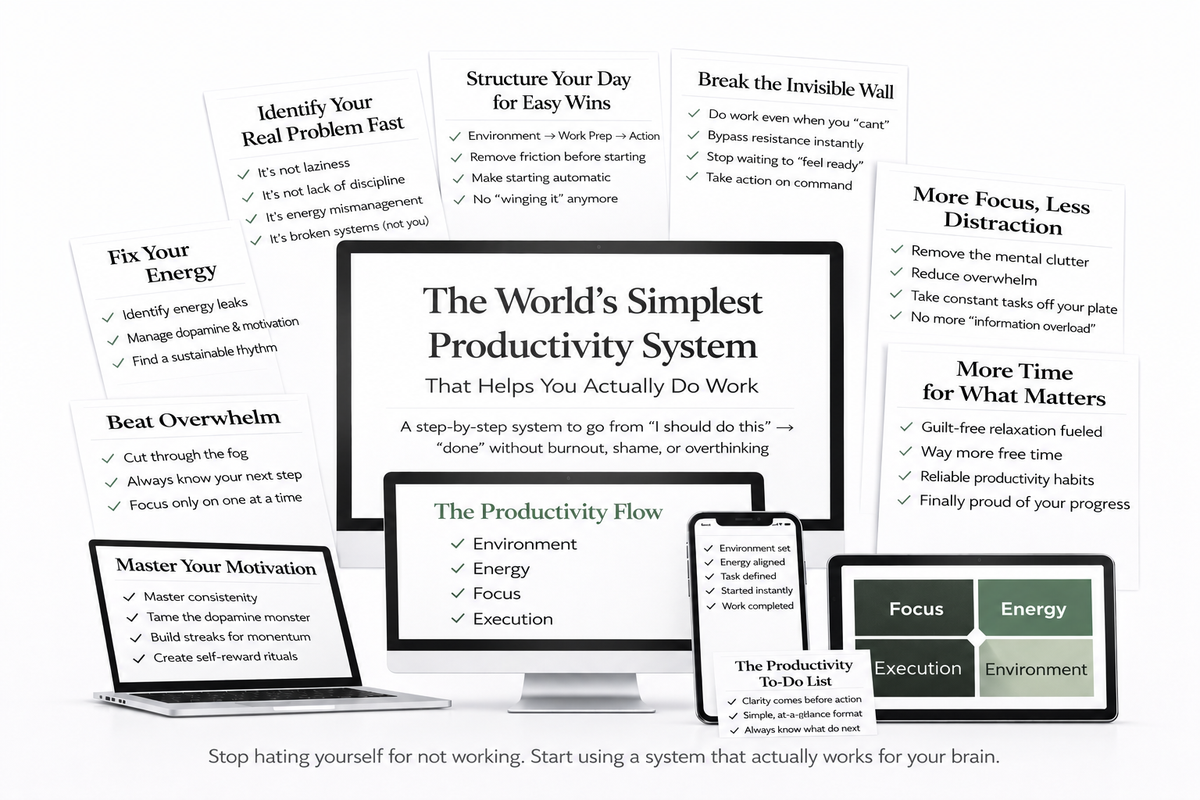
Productivity advice is everywhere, yet many people still struggle with procrastination, inconsistent routines, and overwhelming to-do lists. The World’s Simplest Productivity System is presented as an approach that emphasizes simplicity over complexity, helping users focus on meaningful work instead of managing endless productivity tools.
This review provides an independent overview of the system, including its core ideas, potential benefits, possible drawbacks, and who may find it valuable. It is intended to help readers understand the general approach before deciding whether it aligns with their needs.
What Is the World’s Simplest Productivity System?
The World’s Simplest Productivity System is designed around the principle that productivity should be easy to maintain rather than difficult to master. Instead of relying on dozens of apps, detailed project boards, or complicated planning methods, it encourages a streamlined workflow that keeps attention on completing important tasks.
The philosophy behind the system is that many people spend too much time organizing work and too little time actually doing it. By reducing unnecessary complexity, users can devote more energy to execution and consistency.
Core Principles
1. Simplicity First
The system encourages minimizing unnecessary processes. Rather than tracking every small activity, users focus on the work that creates the greatest impact.
2. Prioritize High-Impact Tasks
Instead of maintaining an endless task list, emphasis is placed on identifying the few activities that produce the most meaningful results.
3. Build Consistent Habits
Long-term productivity depends more on daily consistency than occasional bursts of motivation. Establishing repeatable routines helps maintain momentum.
4. Reduce Decision Fatigue
Making fewer unnecessary decisions throughout the day allows more mental energy for creative and strategic work.
5. Eliminate Distractions
Removing interruptions and focusing on one priority at a time can improve concentration and reduce stress.
Who Is This System Designed For?
This style of productivity framework may be useful for:
- Entrepreneurs
- Freelancers
- Small business owners
- Students
- Content creators
- Remote workers
- Digital marketers
- Busy professionals
- Anyone overwhelmed by complicated planning systems
People who frequently switch between multiple projects may appreciate a simpler workflow that emphasizes execution.
Key Benefits
Easy to Understand
One of the strongest aspects of the approach is accessibility. Beginners do not need extensive knowledge of productivity methodologies to start applying the concepts.
Less Overwhelm
Many traditional systems involve numerous categories, labels, and tracking methods. A simplified workflow can reduce mental clutter and make planning feel less intimidating.
Better Focus
Concentrating on a limited number of important tasks encourages deeper work and minimizes constant context switching.
Improved Consistency
Because the approach is intentionally straightforward, it may be easier to maintain over weeks and months compared to highly detailed productivity frameworks.
Flexible Across Different Careers
Whether someone manages a business, studies at university, or works remotely, the underlying principles can often be adapted to different schedules and responsibilities.
Potential Limitations
No productivity method works perfectly for everyone. Some users may prefer more advanced systems with extensive project management features.
Potential limitations include:
- Limited customization for highly complex projects
- May not replace enterprise-level project management tools
- Requires self-discipline to maintain daily habits
- Simplicity may feel too minimal for users who enjoy detailed planning
Understanding these limitations helps set realistic expectations.
What Makes It Different?
Many productivity systems introduce numerous rules, templates, and workflows that can become overwhelming.
A simpler approach generally focuses on:
- Clear priorities
- Fewer daily decisions
- Reduced administrative work
- Consistent execution
- Sustainable habits
For people who have repeatedly abandoned complicated productivity methods, this philosophy may be refreshing.
Practical Applications
Users can apply similar concepts to many areas of life:
Business
Focus on revenue-generating tasks before administrative work.
Education
Study the highest-priority subjects before less important assignments.
Content Creation
Spend more time creating and publishing instead of endlessly organizing ideas.
Personal Life
Simplify household planning, errands, and personal goals using a limited set of priorities.
Productivity Habits That Complement This Approach
Even outside of the specific system, these habits generally support better productivity:
- Plan tomorrow before ending today’s work.
- Start with the most important task.
- Reduce unnecessary notifications.
- Schedule focused work sessions.
- Batch similar tasks together.
- Review progress weekly.
- Keep your workspace organized.
- Take regular breaks to maintain energy.
- Avoid multitasking whenever possible.
Pros
- Beginner-friendly
- Easy to implement
- Encourages consistent habits
- Reduces unnecessary complexity
- Promotes better focus
- Adaptable to different professions
- Helps reduce productivity overwhelm
Cons
- May feel too basic for advanced planners
- Not intended to replace dedicated project management software
- Requires personal accountability
- Results depend on consistent execution
Is It Worth Considering?
If you often feel overwhelmed by elaborate productivity systems, a simplified framework may be easier to adopt and maintain. People who value practical action over extensive planning may appreciate this style of productivity.
On the other hand, professionals managing large teams or highly technical projects may still require specialized planning tools alongside any personal productivity framework.
Frequently Asked Questions
Is the World’s Simplest Productivity System suitable for beginners?
Yes. Its emphasis on straightforward habits and clear priorities makes it approachable for people who are new to productivity methods.
Can students benefit from it?
Many of the underlying ideas—such as prioritization, consistency, and minimizing distractions—can be helpful for academic work.
Does it require special software?
The general concepts can often be practiced using simple digital or paper planning tools, depending on personal preference.
Will it work for business owners?
Entrepreneurs and freelancers may find the focus on high-impact tasks particularly useful when balancing multiple responsibilities.
How long does it take to see results?
Results vary depending on consistency, current habits, and individual goals. Like most productivity approaches, regular practice is more important than short-term intensity.
Final Verdict
The World’s Simplest Productivity System presents an appealing philosophy for individuals who want a less complicated way to organize their work. By emphasizing clarity, consistency, and meaningful action, it encourages users to spend less time managing tasks and more time completing them.
Although it may not replace sophisticated project management solutions for complex organizations, its straightforward principles can provide a practical foundation for many individuals seeking a sustainable productivity routine.
If your biggest challenge is staying focused rather than finding another complicated planning method, this type of simplified approach is worth exploring as part of your personal productivity toolkit.



Reviews
There are no reviews yet.