
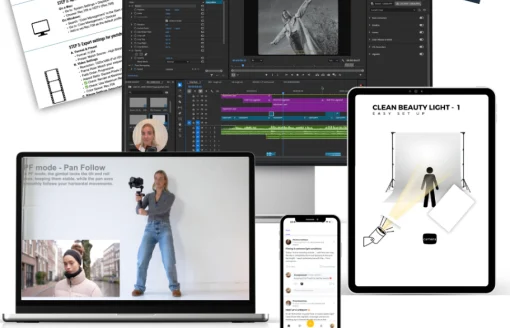

Description
An Honest, In-Depth Review of Eva Glasbeek – Video Campaign Formula
Navigating the creative industry as a freelance photographer or videographer often feels like driving without a map. While film schools and YouTube tutorials excel at teaching camera gear, shutter speeds, and lighting setups, they rarely touch on the business mechanics required to build a sustainable, high-income brand. This is precisely where Eva Glasbeek – Video Campaign Formula positions itself—promising to bridge the gap between technical visual creation and lucrative client acquisition.
Whether you are an aspiring filmmaker struggling to land your first commercial client or an experienced creator stuck undercharging for high-effort projects, this comprehensive review explores every facet of the program. We will examine the core curriculum, business templates, practical workflows, and real-world applicability to help you decide if this course is worth your investment.
What Is Eva Glasbeek – Video Campaign Formula?
Eva Glasbeek – Video Campaign Formula is a specialized online program designed to transition visual creators into confident, high-earning commercial photo and video professionals. Created by Amsterdam-based photographer and videographer Eva Glasbeek, the course synthesizes years of real-world trial, error, and client execution into a structured blueprint.
Unlike generic filmmaking courses that focus solely on camera gear or editing techniques, this program treats video creation as an end-to-end commercial business. It addresses the complete lifecycle of a campaign:
-
Establishing a signature artistic style and brand identity.
-
Outreach strategies to attract premium commercial brands.
-
Value-based pricing models and client negotiation.
-
Pre-production planning, concept development, and pitch deck creation.
-
On-set execution and post-production delivery.
Course Curriculum Breakdown
The program is organized into dedicated modules, each targeting a crucial stage in a visual creator’s career. Below is a detailed look at what each section delivers.
Module 1: Mindset & Technical Foundations
The course opens by addressing the mental and technical hurdles that hold creators back. Eva addresses common pitfalls like imposter syndrome, hesitation to approach brands, and camera paralysis. Alongside mindset work, the module covers foundational camera and edit techniques, focusing on light, sound, color grading, and overlays to create a polished commercial aesthetic.
Module 2: Brand Identity & Defining Your Niche
Trying to appeal to everyone is a fast track to remaining unnoticed. In this section, students learn to:
-
Define and refine their unique aesthetic style.
-
Identify ideal target clients for long-term retainers and high-budget campaigns.
-
Set clear short-term and long-term business goals to turn creative hobbies into structured enterprises.
Module 3: Client Acquisition & Portfolio Optimization
A impressive portfolio means little if potential clients never see it. This module acts as an outreach playbook:
-
Building a portfolio landing page designed specifically for high conversion rates.
-
Optimizing social media profiles to attract inbound organic leads.
-
Cold emailing and networking strategies, including proven pitch templates.
-
Implementing client retention methods that build repeat commercial business.
Module 4: Pricing, Mindset & Negotiation Strategy
Pricing is where most freelance creatives struggle. Eva introduces her proprietary pricing frameworks designed to eliminate guesswork:
-
Overcoming poor money mindsets and lowball pricing habits.
-
Understanding real-world market rates for commercial photo and video campaigns.
-
A 5-step pricing calculator to accurately determine project rates.
-
The 25% price range negotiation strategy for handling client counter-offers confidently.
Module 5: End-to-End Campaign Execution
The final core module takes students through a commercial video project from brainstorm to final delivery:
-
Asking the right diagnostic questions during initial client discovery calls.
-
Creating treatment decks, storyboards, and visual pitch materials.
-
Preparing for, setting up, and running professional set environments.
-
Delivering finished assets while maintaining clear communication throughout post-production.
Course Structure At A Glance
| Module | Core Focus | Key Deliverables & Outcomes |
| 1. Foundations | Mindset & Creative Aesthetic | Understanding camera mechanics, lighting, and overcoming imposter syndrome. |
| 2. Positioning | Style & Ideal Client Profile | Defining a signature look and targeting lucrative commercial niches. |
| 3. Acquisition | Outreach & Lead Generation | High-converting portfolio layout, lead pipelines, and email pitch templates. |
| 4. Monetization | Pricing & Negotiation | 5-step pricing formula, market rates, and 25% negotiation strategy. |
| 5. Production | Discovery to Final Delivery | Pre-production questionnaires, storyboards, shoot preparation, and asset handoff. |
Included Resources & Bonuses
In addition to video lessons, the program includes a library of practical downloadable resources:
-
Email Outreach Pitch Templates: Tested email sequences for pitching commercial brands and agency leads.
-
Client Communication Brochure Template: Professional documents to send to potential clients before discovery calls.
-
Implementation Workbooks: Interactive PDFs designed to help creators execute the strategies as they complete each module.
-
Business Strategy Templates: Documents to organize long-term financial targets and operational workflows.
-
Private Creator Community: Ongoing access to a network of photo and video creators for feedback, accountability, and project collaboration.
What Makes This Program Different?
The commercial videography course space is crowded with options, ranging from technical camera guides to high-level agency growth incubators. Here is how this program distinguishes itself from typical alternatives:
1. Direct Focus on Commercial Campaigns
Instead of teaching creators how to shoot weddings, real estate, or stock footage, the core framework centers on commercial brand campaigns. Commercial clients typically operate with defined marketing budgets, allowing creators to charge significantly higher project rates compared to consumer-facing video services.
2. Practical Business Systems Over Theory
Many academic creative programs rely on outdated theoretical frameworks that do not reflect modern digital marketing. Eva’s curriculum focuses strictly on modern, actionable execution—giving students exact copy-and-paste email templates, pricing calculators, and structured shoot checklists.
3. Step-by-Step Production Workflows
Learning how to present concepts to corporate clients is a hurdle for self-taught videographers. The program outlines how to communicate vision clearly during pre-production, preventing misaligned client expectations and tedious revision cycles.
Who Is This Course Best Suited For?
Ideal Candidates:
-
Self-Taught Videographers: Creators who know their way around camera gear and editing software but lack a system for landing consistent, well-paying clients.
-
Photographers Expanding into Video: Experienced stills photographers looking to add high-ticket video campaign services to their existing offerings.
-
Undercharging Freelancers: Creators taking on labor-intensive projects for minimal pay who want to transition to value-based pricing models.
-
Emerging Visual Artists: Beginners seeking a structured roadmap to avoid years of trial-and-error in client outreach and pricing.
Who Should Skip It:
-
Pure Hobbyists: Individuals shooting video purely for personal enjoyment who have no desire to work with corporate or commercial clients.
-
Advanced Commercial Directors: Established directors already booking five-figure brand campaigns consistently with full production crews.
Pros and Cons Analysis
Key Strengths (Pros):
-
Comprehensive Roadmap: Covers both creative development and business operations within a single, unified curriculum.
-
Actionable Templates: Includes ready-to-use email scripts, pricing guides, and client presentation tools that save dozens of hours.
-
Clear Pricing Structure: The 5-step pricing method and negotiation guidance provide clear rules for charging appropriate rates.
-
Community Support: Access to an active creator network provides ongoing accountability, project feedback, and peer collaboration.
Areas for Improvement (Cons):
-
Requires Active Execution: The course provides templates and systems, but success depends entirely on the student actively doing outreach and implementation.
-
Commercial Focus: Creators exclusively interested in documentary, narrative filmmaking, or personal blogging may find less relevance in the brand campaign modules.
Real-World ROI: Is It Worth the Investment?
When assessing educational programs in the creative sector, the return on investment (ROI) comes down to client acquisition and pricing confidence.
If a student applies the outreach templates and pricing strategies to land just one or two commercial video projects, the course can easily pay for itself. Moving from charging $500 per video to booking a single $3,000 brand campaign completely shifts the financial trajectory of a freelance business.
By substituting costly trial-and-error with a proven outreach and production framework, creators save months—if not years—of guesswork.
Final Verdict
Eva Glasbeek – Video Campaign Formula stands out as a practical, well-structured, and highly relevant training program for contemporary visual creators. It addresses the precise gaps left behind by traditional education and technical online tutorials: how to market yourself, how to price with authority, and how to execute commercial video campaigns professionally.
For any videographer or photographer serious about building a profitable, sustainable commercial practice, this course provides the blueprint, tools, and confidence required to turn creative skill into a thriving enterprise.
Reviews
There are no reviews yet.